The Holographic Universe - When Science Rediscovers Ancient Wisdom
Between quantum physics and ancient Egypt, a new understanding emerges, one that reveals consciousness as the bridge uniting matter and spirit.
In 1991, author Michael Talbot published The Holographic Universe, synthesizing the groundbreaking works of physicist David Bohm and neuroscientist Karl H. Pribram. Their conclusion was staggering: the universe might not be a collection of separate parts, but a vast hologram an indivisible field of information where each fragment contains the whole.
In such a universe, nothing is truly isolated. Every point in space holds the memory of all others. Reality, as we perceive it, is not a fixed structure but a projection shaped by our consciousness. Observing the world becomes an act of participation. In other words, what we see “out there” is deeply entangled with what we hold “in here.”
Two Eyes, Two Realities
Long before quantum physics, the ancient Egyptians expressed this understanding through the symbolism of the two eyes:
the Eye of Ra — solar, masculine, rational, and outward-looking;
and the Eye of Horus — lunar, feminine, intuitive, and inward-looking.
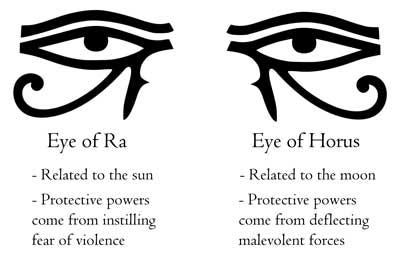
Each eye perceives the world through a different frequency of awareness. Together they represent the total vision of the cosmos. Yet, in most human experience, these two modes of perception remain divided — one anchored in matter, the other in spirit.
It is as if we placed a fish into an aquarium and filmed it with two cameras: one from the front, one from the side. Both would capture the same event, yet reveal different shapes, movements, and depths. When our mind tries to merge these two perspectives into one coherent image, confusion arises. We start believing the distortion is real. We live as if schizophrenic by design — torn between two partial truths of a single reality.

The Schism and the Bridge
Carl Jung saw this fragmentation at the core of the human psyche. He described how the masculine and feminine archetypes — animus and anima — constantly seek reconciliation within us. Alan Watts, through Taoist and Zen traditions, translated this insight into the image of the Yin and the Yang: two opposites endlessly revolving around each other, never in conflict, only in dance.

Watts once said that if you spin the Yin-Yang symbol fast enough, the black and white blur into grey — the eye can no longer distinguish duality. What remains is not one side winning over the other, but the presence of both, vibrating in unity beyond perception.
Our technological acceleration today mirrors this phenomenon. The faster we move, the harder it becomes to appreciate the subtle interplay of opposites. The human mind, overwhelmed by speed, projects its own color onto the spinning wheel of existence — mistaking its projection for truth.
Direct Experience
When resistance arises in my experience, I slow down. Not to escape or analyze it, but to sense what part of my perception is incomplete. In that stillness, I seek to acknowledge the unbalance between the anima and the animus, the conscious and the subconscious, matter and energy, shadow and light.
Carl Jung reminded us that consciousness represents only a small fragment of our psyche — roughly five percent — while the subconscious holds the remaining vastness of our mental space. From this perspective, it becomes clear that what we call “reality” is always relative and limited, filtered through an incomplete lens.
By bringing awareness into those blind spots, I often discover that what appeared as conflict was simply the dance of two complementary truths. My attachment to one face of reality created the tension.
When I step back, duality softens, and I can perceive Life from a trinitarian point of view: two polarities interacting to give birth to a third force — a wider field of consciousness that contains and harmonizes them both.
Helium — The Element That Never Freezes
In the physical world, there exists one known element that cannot be solidified: helium. No matter how close it gets to absolute zero, helium refuses to crystallize. It remains fluid — free, alive, unbound by the cold.
This property makes helium a fascinating metaphor for the divine principle in matter. Even in the deepest shadow, there is a spark that cannot freeze. A molecule that carries the memory of eternal warmth. The eternal fire within the atomic fabric of creation.
If everything in the universe is holographic, then this indestructible fluidity is not limited to helium — it is the very nature of consciousness itself. There is always a layer of being that remains untouchable, uncorrupted, unbroken.
The Bridge Between Science and Mysticism
What the mystics intuited through inner vision, science is beginning to describe through mathematics and observation:
that consciousness and reality are one continuous field;
that matter and mind are two aspects of the same wave;
that perception itself is the act of creation.
To understand this is to begin seeing with both eyes open — Ra and Horus reunited, intellect and intuition merged. It is to move beyond contradiction and recognize that the universe is not a puzzle to be solved but a living mirror inviting us to remember what we are.
The real quantum leap of our time is not technological. It is perceptual.
About the author

Antoine explores the hidden architecture of human experience and the movement that brings consciousness back to the body, the heart, and the inner truth. His work weaves ancient wisdom, lived experience, and embodied clarity to support those called to remember who they are and why they came here. He walks this path in service to Life, sharing what he has learned with anyone who feels the resonance.
Related books
The Holographic Universe
The Revolutionary Theory of Reality
Now featuring a foreword by Lynne McTaggart, The Holographic Universe is a landmark work whose exciting conclusions continue to be proven true by today's most advanced physics, cosmology, and string theory.
Nearly everyone is familiar with holograms--three-dimensional images projected into space with the aid of a laser. Two of the world's most eminent thinkers believe that the universe itself may be a giant hologram, quite literally a kind of image or construct created, at least in part, by the human mind. University of London physicist David Bohm, a protégé of Einstein and one of the world's most respected quantum physicists, and Stanford neurophysiologist Karl Pribram, an architect of our modern understanding of the brain, have developed a remarkable new way of looking at the universe. Their theory explains not only many of the unsolved puzzles of physics but also such mysterious occurrences as telepathy, out-of-body and near-death experiences, "lucid" dreams, and even religious and mystical experiences such as feelings of cosmic unity and miraculous healings.