Prince William and the Signal of the Future: Archetypal Mutation at the Threshold of Aquarius
From distance to presence: the royal signal of a new era.
At first glance, Prince William’s choice to settle with his family in a “modest” eight-bedroom home, without permanent staff, cooking his own meals, driving himself, and spending more time with his children, may look anecdotal. But for those who read history through the lens of long cycles, this gesture is a signal.
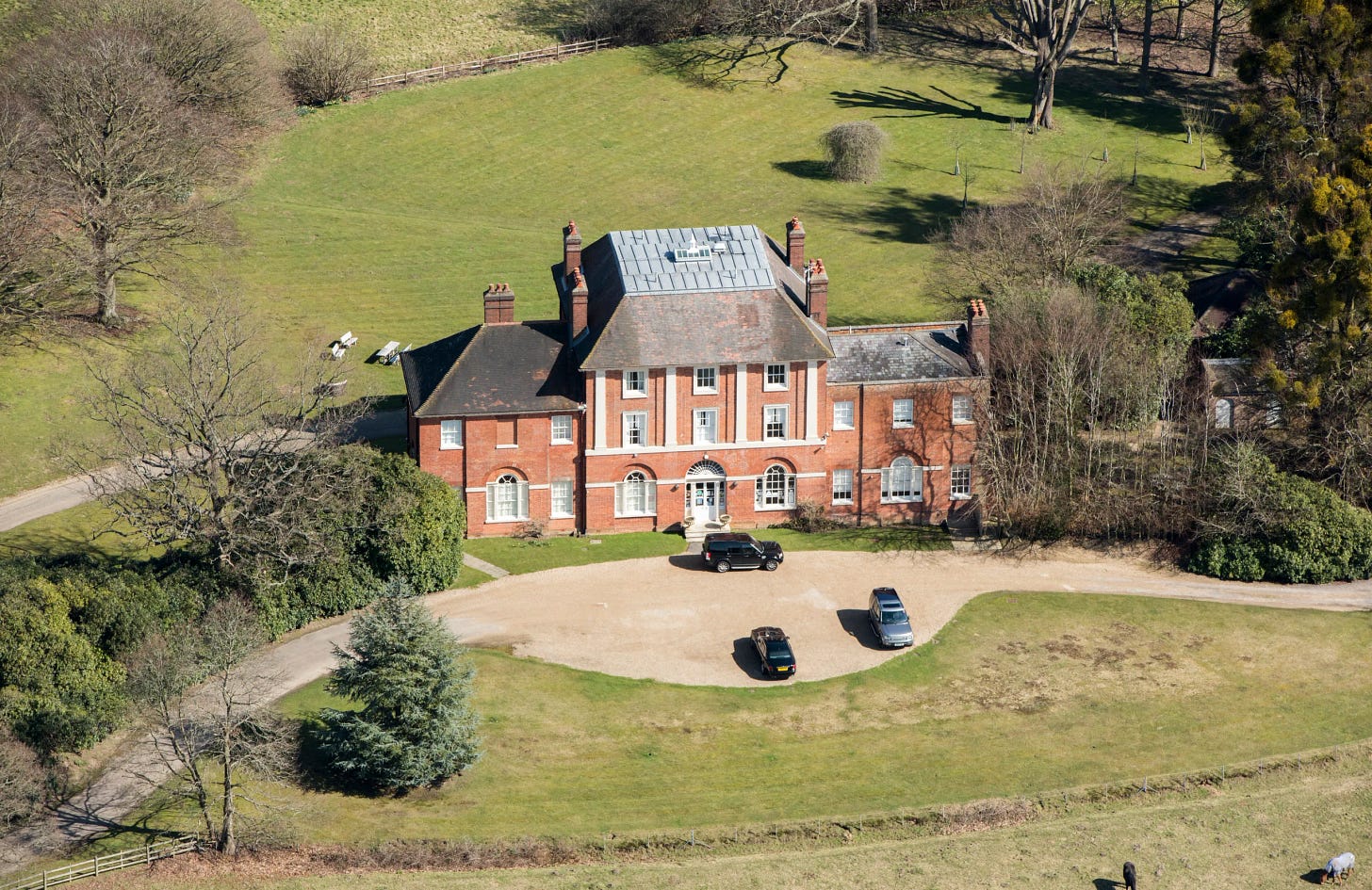
The British monarchy is not just a family; it is a living archetype inscribed in the collective psyche. It carries both the shadow and the light of an empire that, not long ago, ruled a third of the planet and shaped the institutions of modernity. And now, at the very heart of this symbolic edifice, the heir breaks away from the Edwardian model of pomp and ermine.

When the heir chooses not to live in Windsor’s thousand rooms but in a simple cottage of eight, the break with tradition is unmistakable.
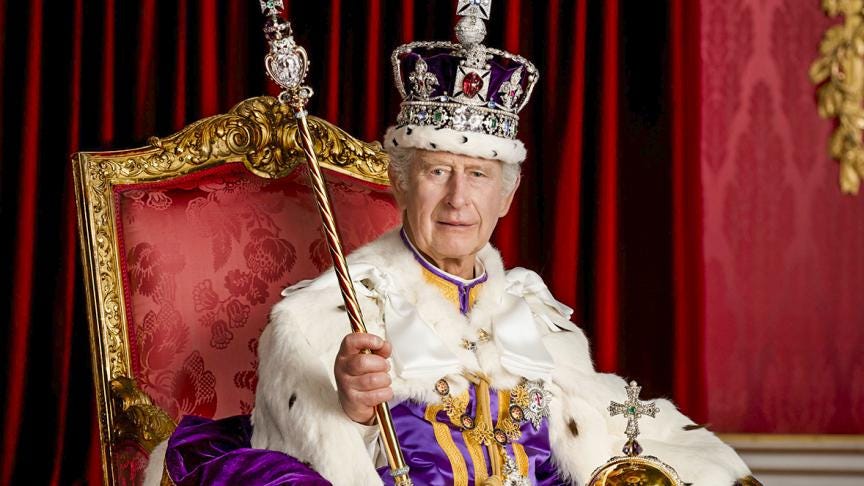
The contrast with his father is striking: King Charles still inhabits the full machinery of the old order, two people to help him dress, one person whose only role is to squeeze toothpaste onto his brush, a chef dedicated to toasting bread for his morning eggs, and a personal staff of no fewer than 125. William, by contrast, opts for simplicity, intimacy, and daily life. This is not a domestic detail: it is an archetypal fracture between two eras.
From the Age of Pisces to the Age of Aquarius
William’s gesture embodies the larger collective transition we are living: the end of the Age of Pisces and the entry into the Age of Aquarius.
- The Piscean Age produced hierarchical, vertical structures where the sacred was projected outside the self: kings, popes, priests, palaces, cathedrals. Authority was defined by distance between the individual and power.
- The Aquarian Age calls for horizontality, transparency, and lived integrity. It replaces external ritual with inner coherence, pomp with authenticity, imposed symbols with embodied signs.
William’s choice is therefore not a matter of personal preference. It is a vibrational alignment with the energy of a new era.
Jung, McKenna, Spinoza, Einstein: Four Lenses on the Mutation
- Jung: We are witnessing the transformation of a collective archetype. The shadow of royalty (excess, dependency, distance) is being confronted. The archetype is reconfiguring itself to survive in a world where the sacred is recognized not through separation but through integration.
- McKenna: William embodies the “archaic revival,” a return to the simple, the living, the everyday, in a world saturated by spectacle. Power is redefined not by its distance from life, but by its closeness to it.
- Spinoza: True power is the capacity to exist according to one’s nature. By rejecting the apparatus of 125 servants, William declares that he wishes to live as a man before ruling as a king. And it is precisely this that amplifies his symbolic power.
- Einstein: “Make everything as simple as possible, but not simpler.” In the complexity of our time, William offers a clear equation: the survival of an institution like the monarchy depends on simplicity.
A Planetary Signal
The “Firm” trembles.
For what becomes of Buckingham Palace if the future king leaves it behind? What remains of an empire if its symbols are emptied out? The answer is simple: the institution survives only if it mutates. And William is making that mutation visible.
Less than a century ago, the British Empire exported its model to vast swaths of the world. Today, that same empire is sending the opposite signal: the authority of tomorrow will be built on simplicity, proximity, and coherence.
Conclusion: A Choice Beyond the Individual
William is not merely choosing a house. He is stepping into the great cosmic transition humanity is undergoing: the end of Pisces, the dawn of Aquarius. The end of the inaccessible king, the beginning of the embodied one.
And we must recognize what this gesture foreshadows. Once he becomes King, it is very likely that William will use the full reach of his influence, not to perpetuate the old grammar of power, but to help manifest a world aligned with his vision and values. Simplicity over pomp, intimacy over distance, coherence over spectacle.
This is why his choice matters far beyond royal gossip. It tells us that one of the most enduring institutions on Earth is preparing to mutate with the times. The monarchy will not survive by clinging to its thousand rooms; it will survive by embodying the Aquarian archetype of presence, humility, and shared humanity.
For those attentive to the detail, the gesture may look subtle. But for those who can read its scope, it is powerful. We are not only witnessing the mutation of an archetype, we are glimpsing the possible futures of power itself. And in this royal mirror, it is the world’s relationship to authority, to the sacred, and to simplicity that is being redrawn.
About the author
Antoine explores the hidden architecture of human experience and the movement that brings consciousness back to the body, the heart, and the inner truth. His work weaves ancient wisdom, lived experience, and embodied clarity to support those called to remember who they are and why they came here. He walks this path in service to Life, sharing what he has learned with anyone who feels the resonance.